

Fast, Reliable Dryer Vent Cleaning Across Pico Rivera
Dryer vent cleaning in Pico Rivera typically costs $89 – $179 and takes under an hour in a standard single-story home. The work involves clearing packed lint from the full duct run, checking the exterior hood, and confirming airflow with a real measurement. If your laundry was moved into a converted garage or back addition, the job often takes longer because the duct run is longer, bent, or disconnected somewhere you can’t see. Call (866) 361-2279 and we’ll walk you through what we’d check before we ever book the appointment.
We keep trucks staged from our Whittier shop, so a crew can reach most of Pico Rivera in well under 30 minutes. That matters when a dryer has stopped drying entirely and laundry is piling up. We know the tract grids, the added-on rooms, and the old foil flex duct hiding behind stucco walls here. This isn’t a generic vent-cleaning visit. It’s a diagnostic pass through duct that hasn’t been touched since the house was built or the laundry was relocated.
Why Pico Rivera Homeowners Call Chimney Sweep Whittier for Dryer Vent Cleaning
Hector Olivares started this company because he kept finding the same problems in older Los Angeles County homes: lint buried in long duct runs, crushed flex behind walls, and dryers that worked twice as hard as they should. Our dryer vent cleaning team treats every call as a fire-safety job first. The work we do for Pico Rivera customers is the same scope we’d want done in our own homes: full-run cleaning, hood check, airflow test, and a straight answer about what needs fixing now and what can wait.
Homeowners here often tell us they’d called other companies that cleaned only the first few feet behind the dryer. That’s not a vent cleaning. A lint clog builds wherever airflow slows, which in Pico Rivera means every elbow, every long horizontal run, and every crushed section you can’t see. We clean the full run from the dryer connection to the exterior hood and show you what we removed. No camera upcharge. No vague “it was dirty” report. You see the before and after.
Response time to Pico Rivera is one reason we’ve become the default call for this area. We answer 24/7. Fast dispatch from 7am to 7pm, Sunday through Friday. A crew can usually be at a home in the 90660 tract grid within a half hour of the call, and same-day appointments are common Monday through Friday. For a converted garage or enclosed patio laundry, we tell you up front the job may take longer because the duct run is seldom a straight shot.
Local knowledge matters here. We know the post-WWII stucco single-story stock along Rosemead Boulevard and Whittier Boulevard, the 1940s – 1960s tract layout, and how those rooflines affect exterior hood placement. When a dryer vent hood points into a carport or covered patio instead of through a wall, the run isn’t just longer. It works against the dryer’s fan. We look for that before we ever put a brush in the line.
Our Dryer Vent Cleaning Services in Pico Rivera
Full Vent System Cleaning
We clean the entire dryer duct run, not just the transition hose behind the machine. In Pico Rivera homes where the laundry sits in a back addition or converted garage, that run can be 15 to 30 feet with two or three bends. Each bend is a lint collection point. We run a rotary brush through the full length, then blow the line clear and verify airflow at the exterior hood. You should be able to feel a steady, strong airflow outside when the dryer is running. If you can’t, the vent isn’t clean or the run is compromised.
A standard full-run cleaning in Pico Rivera runs $89 – $179 depending on the run length, number of bends, and how long it’s been since the last cleaning. Most homes fall in the $110 – $140 range. The written estimate sets the final price before any work begins.
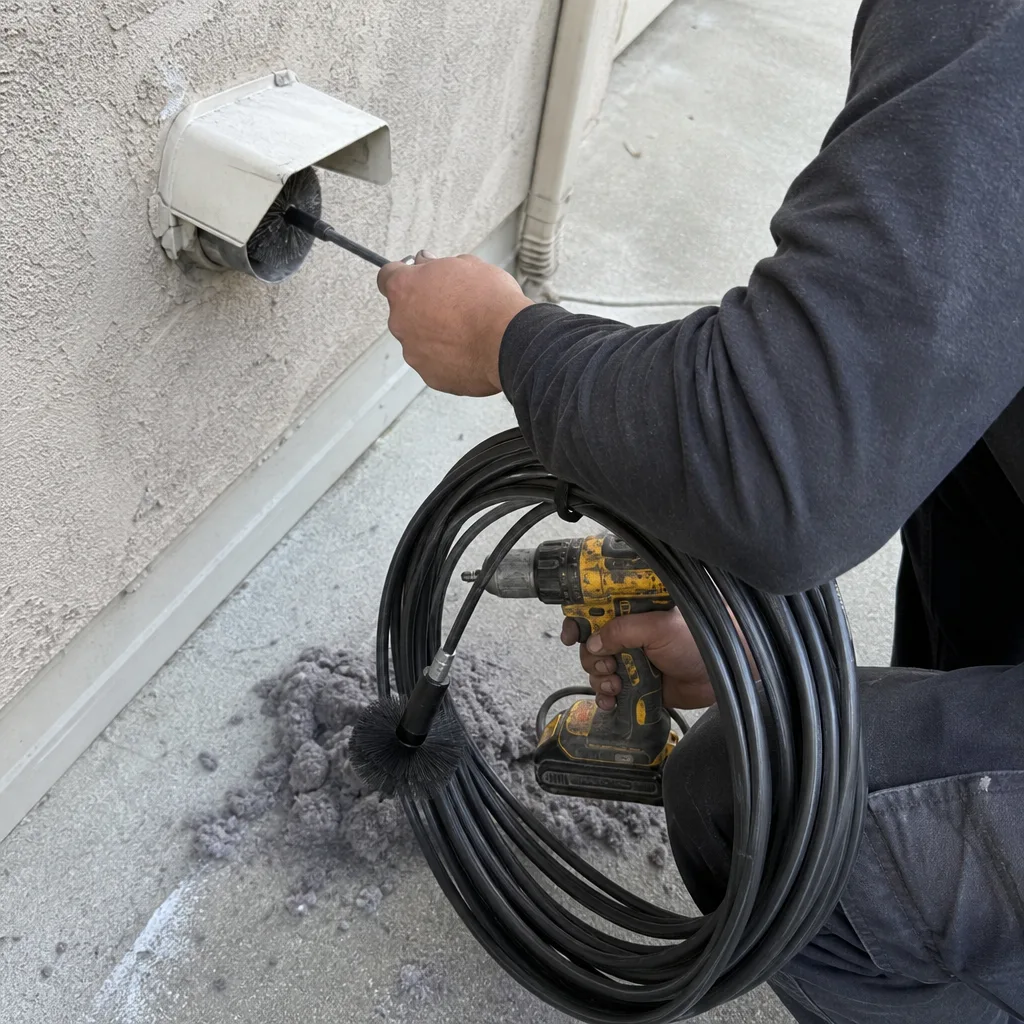
Lint Removal
Lint removal is the core of what we do, but it’s also where shortcuts show up fastest. A quick vacuum pass behind the dryer doesn’t remove what’s packed into the first elbow or the lint dam sitting three feet in. We pull the machine far enough to disconnect the transition hose, inspect it, and then work the full duct. In tract homes with relocated laundries, we routinely remove a plastic grocery bag’s worth of packed lint from a single run. That’s the difference between a dryer that dries in one cycle and one that takes three.
After we clear the line, we check the lint screen and trap, then test airflow with the dryer running. If it drops again immediately, the problem is the duct itself, not the lint. In Pico Rivera, that usually means a crushed section or a disconnected joint behind a wall.
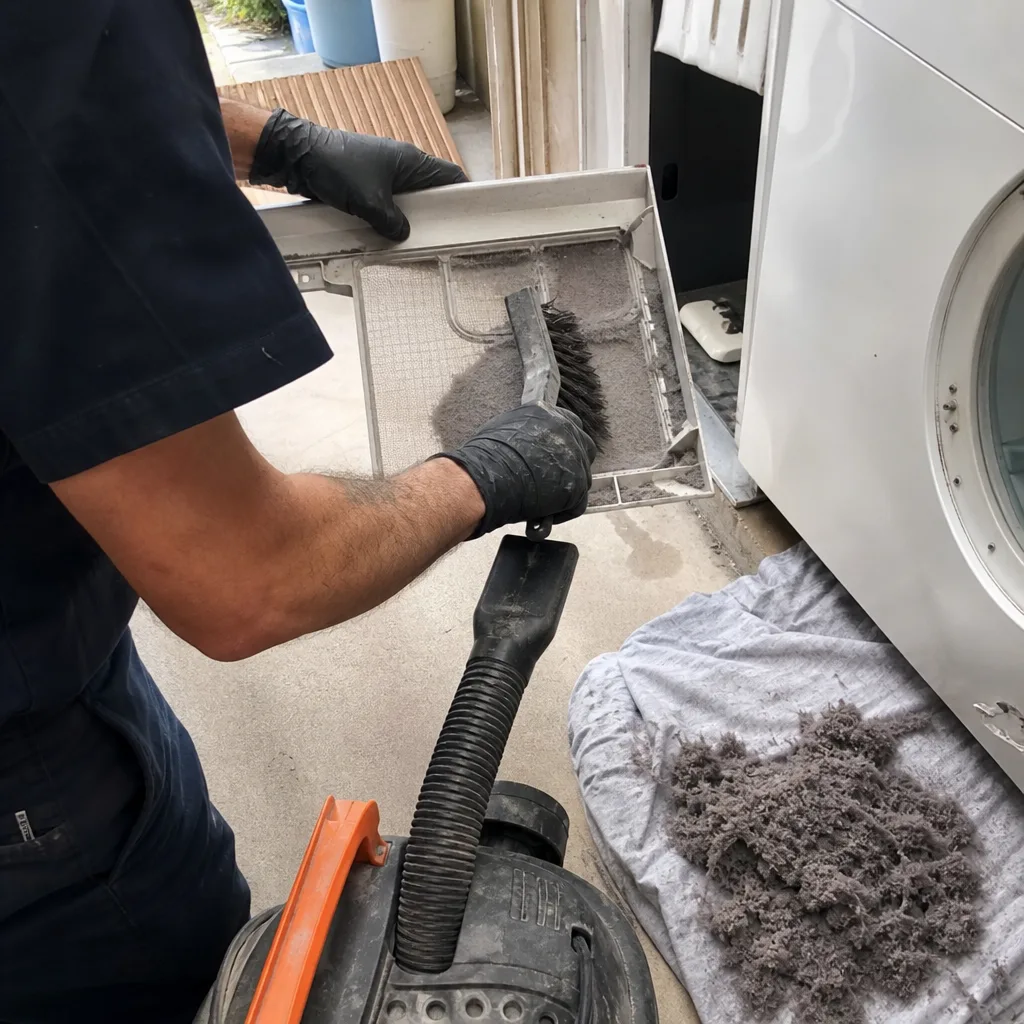
Lint Screen & Trap Cleaning
The removable lint screen you clean between loads is only part of the trap system. Behind it, inside the machine’s air path, a secondary lint trap or blower wheel can load up over time. That’s more common in older dryers, which many Pico Rivera homes still run. We clear the screen channel, vacuum the trap housing, and pull visible lint off the blower wheel when the machine allows access. It’s a five-minute job that keeps the dryer moving air the way it should.
Doing this on every visit means we’re not just cleaning the duct. We’re cleaning the entire path your dryer’s air travels from drum to hood. In an older machine with a lazy blower, even a clean duct won’t dry right. We’ll tell you when the duct is fine and the dryer itself is the bottleneck.
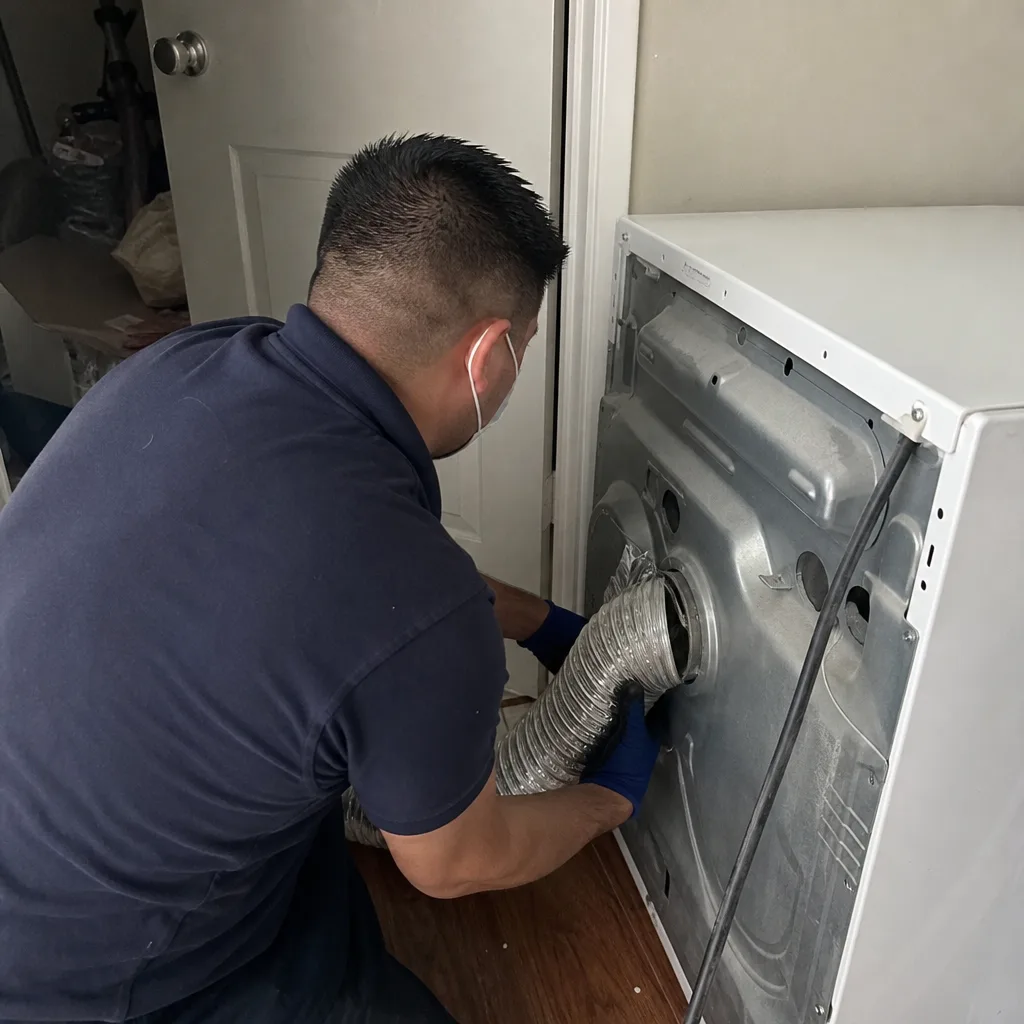
Rooftop Vent Cleaning
Some Pico Rivera dryer vents terminate through the roof instead of a side wall, especially on lot-compressed additions where the laundry sits against an interior wall. Rooftop terminations collect lint at the cap and trap more buildup because the air has to push vertically. We’ll get on the roof, remove the cap, clean the termination, and clear the final few feet of run and confirm the flapper opens freely. A stuck flapper is a common reason a clean duct still won’t vent.
Rooftop access adds a little time and cost to the job, usually $20 – $40 more than a wall-hood job. We’ll tell you before we book whether your termination is roof or wall so there are no surprises on the estimate.
Common Dryer Vent Cleaning Problems We See in Pico Rivera Homes
- Relocated laundry rooms in added-on or converted spaces. When the washer and dryer moved into a garage, patio, or back room, the duct often ran long and sideways with multiple elbows. Lint piles up at every bend and drying time climbs. These are the most common calls we get from Pico Rivera.
- Old foil or vinyl flex duct behind a wall. 1940s – 1960s tract homes here often still have the original flex duct, or a homeowner installed a cheap replacement decades ago. It crushes, sags, and collects lint in every ridge. Removing it and replacing the run with rigid metal duct fixes airflow permanently.
- Disconnected exterior hood. When a laundry moves, the old hood sometimes stays where it was, and a new vent run never gets connected to it properly. Lint-laden air dumps into a wall cavity or attic. We check the hood connection on every job.
- Bird nests and debris blocking the hood. Pico Rivera’s mature trees and roofline protection make exterior hoods attractive to birds. A nest built in or just behind the hood can shut the vent down entirely. We remove nests and debris, then make sure the flap closes after each use.
Pricing for Dryer Vent Cleaning in Pico Rivera, CA
A typical full vent system cleaning in Pico Rivera runs $89 – $179, with most single-story tract homes landing between $110 and $140. Lint screen and trap cleaning is included in the full service, not a separate line item. Rooftop vent cleaning generally adds $20 – $40 for roof access. If your run is unusually long, hidden behind a finished wall, or the hood has to be relocated, the written estimate reflects that before any work begins. We don’t work from a price sheet alone. We quote each job based on the actual duct run you have, not a one-size number. Estimates are free. Call (866) 361-2279 and we’ll give you a real number for your home.
We Also Serve Cities Near Pico Rivera
While this page is specific to Pico Rivera, our crews handle dryer vent cleaning in the surrounding communities every week. That includes Montebello, Whittier, South Whittier, and Monterey Park. Same booking window, same full-run cleaning standard, same straight talk about what we find. Call (866) 361-2279 and we’ll figure out the fastest day to get your vent clear.
Because So Many Pico Rivera Homes Are Post-WWII Tract Houses
There’s a structural reason dryer vent problems here look different from what we see in newer cities. Pico Rivera’s housing stock is predominantly 1940s – 1960s single-story stucco, built before laundry rooms were standard and before building codes required short, straight dryer ducts. The original laundry hookup often sat in the kitchen or a back porch. Over the decades, families enclosed patios, converted garages, or added back rooms, and the dryer moved with them.
That relocation is the defining dryer vent problem in Pico Rivera. A long, bent, or hidden duct run with an exterior hood that no longer lines up with the machine. Lint is the symptom. The real issue is the duct geometry: too long, too many elbows, the wrong material, or a termination that doesn’t line up. A vent-cleaning company that never looks behind the wall or on the roof will clean the first few feet and leave the actual restriction untouched. We don’t do that.
On a call off Gallatin Road in the 90660 tract grid, a family’s dryer had stopped drying in one pass. The laundry had been moved into a converted back room years earlier. Our tech followed a crushed foil flex run that had been pinched behind a wall and disconnected at the exterior hood. We replaced the crushed section with rigid duct, reconnected the hood, cleared the packed lint from the full run, and the dryer was back to drying a load in a single cycle. That’s the kind of fix this page exists to explain.
If your home is one of those stucco tract houses with an added-on laundry, the odds are high the duct has never been properly routed. The dryer has been working against its own vent for years. The first visit fixes the lint. The more important part is finding the crushed or disconnected section and fixing it so the problem doesn’t return in six months.
What We Find in the Dryer Vents of Older Pico Rivera Tract Homes
Long, bent duct runs that kill airflow
A dryer’s blower is rated to push air through a certain length of duct. Every 90-degree elbow adds the equivalent of several feet of straight run. In a converted back room, the duct might leave the dryer, turn left, run through a wall, turn right, drop down, and exit on a different wall entirely. The dryer doesn’t care. It just runs longer and gets hotter trying to push air that has nowhere to go. We map the run, identify where the loss is happening, and either clean what’s there or recommend re-routing the duct to shorten it. The fix is usually simpler than homeowners expect.
Old foil or vinyl flex duct behind walls
The accordion-style foil duct is legal as a short connector between the dryer and the wall, but it’s not meant to carry air through a wall or ceiling. In Pico Rivera, we routinely find 10 to 20 feet of it snaked through wall cavities, sagging between joists, or crushed by a stud. Vinyl flex is worse: it can melt from dryer heat and violates code for any use. We remove that material and replace the run with rigid metal duct that carries lint out instead of trapping it in ridges. If it’s hidden behind a finished wall, we’ll open a small access point, do the work, and patch it back clean.
Disconnected or never-connected hood runs
The exterior hood is the last few inches of the system, and it’s the part most likely to be forgotten when a laundry relocates. The old hood stays on the old wall. The new duct runs somewhere else, maybe into the attic, maybe into a dead space under the floor. Lint and moist air discharge into the house. The dryer keeps running, but the moisture has nowhere to go but the wall cavity or the insulation above the ceiling. We check the termination on every job with a camera, because a hood that looks fine from outside can be disconnected two feet behind it.
Bird nests and debris at the exterior hood
A dryer vent hood with a broken or missing flapper is an open door to the outside. Birds build nests in the hood or just inside the run. Pico Rivera’s tree-lined streets and older rooflines make that a common find. The nest blocks airflow and becomes a lint trap. We remove the nest and debris, then make sure the flapper closes after each cycle so the problem doesn’t return. If the hood itself is old or damaged, we’ll recommend a replacement with matched hardware rather than leaving a cheap plastic cap in place.
How the Cleaning Works on a Pico Rivera Home
We start at the dryer, not at the hood. The machine gets pulled out enough to disconnect the transition hose, and we look at what’s immediately behind it. In a converted laundry room, that hose is often the first problem: kinked, crushed, or too long. We replace it when needed, then run a rotary brush through the full duct from the dryer end to the exterior hood. The brush breaks up packed lint and pulls it back out in chunks.
Then we go outside to the hood, clean it from that end, and run a camera through the line to verify there are no crushed sections, disconnected joints, or nests we missed. After the line is clear, we run the dryer on high and check airflow at the hood. You should feel a firm, steady push of warm air. If you don’t, we haven’t finished. That pressure test is the difference between a clean duct and a clean duct that still doesn’t dry clothes.
The whole service in a standard Pico Rivera tract home takes 45 to 60 minutes. A longer run, a rooftop termination, or a disconnected duct that needs repair adds time. We’ll tell you what we found, show you the lint we removed, and give you a straight answer about whether the duct is safe to use. No upsell. No invented urgency. If it can wait, we’ll say so. If it can’t, you’ll see why with your own eyes.
Key Takeaways for Pico Rivera Homeowners
- Dryer vent cleaning in Pico Rivera costs $89 – $179 for a standard single-story home, with most falling between $110 and $140.
- Relocated laundry rooms are the defining local problem. Converted garages, enclosed patios, and back additions leave long, bent ducts that collect lint fast.
- Old foil or vinyl flex duct behind walls is common in 1940s – 1960s tract homes and should be replaced with rigid metal.
- Bird nests at the exterior hood are a regular find because of the mature trees and older rooflines across Pico Rivera.
- Same-day appointments are common Monday through Friday. We answer 24/7 and dispatch from 7am to 7pm, Sunday through Friday.
Serving Pico Rivera, CA – Our Local Coverage Area
We serve Pico Rivera and nearby communities. Use the map below to see the area we cover. If you’re nearby, we can almost certainly help.
FAQs – Dryer Vent Cleaning in Pico Rivera
The most reliable sign is drying time. If the dryer needs two or three cycles to dry a normal load, the vent is restricted or the run is too long. A duct over 25 feet, or one with more than two elbows, exceeds most dryer manufacturers’ specs once you account for the bends. In a converted back room, a run that travels through multiple walls almost certainly has a restriction. We’ll measure the run and check airflow at the hood to tell you exactly what’s wrong. Call (866) 361-2279 for a free estimate.
Because the moist air isn’t leaving the house. In older Pico Rivera tract homes, that usually means lint is packed into a long or bent duct run, or the duct is crushed behind a wall. The dryer’s moisture sensor reads wet clothes over and over because the damp air can’t escape, so it keeps running. Cleaning the full run and fixing any crushed sections usually restores single-cycle drying. Call (866) 361-2279 and we’ll check the full run from dryer to hood.
No. Foil flex duct is only rated as a short connector behind the dryer, and vinyl flex should never be used for dryer exhaust at all. Behind a wall, foil crushes and collects lint in every ridge. Vinyl can melt. In Pico Rivera tract homes with relocated laundries, this old material is a common fire and airflow risk. We replace it with rigid metal duct that carries lint out of the house without trapping it. The written estimate covers the replacement before we start.
A missing or stuck flapper is the usual cause. The hood should close when the dryer isn’t running, and when it doesn’t, birds use it as a nesting spot. Pico Rivera’s mature trees give birds a nearby food source and nesting material, so a broken hood gets claimed fast. We remove the nest, clean the run, and replace or repair the hood so it closes properly. Call (866) 361-2279 and we’ll inspect the hood as part of the cleaning.
We use a rotary brush and a camera to clean and inspect the run without tearing open the wall. The brush clears packed lint from the full length, and the camera shows us if a section is crushed or disconnected. If the duct needs replacing and it’s fully hidden, we’ll open a small access point, do the work, and patch it back clean. You’ll see the camera footage so you know exactly what was there and what we fixed. Call (866) 361-2279 for a free estimate.
Call (866) 361-2279. We answer 24/7. Fast dispatch from 7am to 7pm, Sunday through Friday. The estimate is free, the price is set before we start, and you’ll see the lint we remove with your own eyes.
Written by Hector Olivares, Owner at Chimney Sweep Whittier, serving Pico Rivera since 2014.