
Emergency Chimney Sweep Near Me: What Whittier Homeowners Should Do First
If you’re searching for an emergency Chimney Sweep Whittier appointment right now, the first thing to know is this: the moment you suspect a chimney fire, close the damper, close the firebox doors if you have them, get everyone out of the house, and call 911. A chimney sweep comes after the fire department has cleared the scene. If you’ve had a heavy smoke event or earthquake damage without visible flames, the sequence is different: stop using the fireplace, call us for a fast dispatch from 7am to 7pm, and don’t light another fire until a professional has looked at the flue.
Most homeowners do this backwards. They call a sweep company first, describe what happened, and only then learn they should have called the fire department an hour ago. This guide walks through the exact sequence so you act in the right order. If you’d rather skip the reading and just talk it through, call (866) 361-2279. We answer 24/7.
During a Chimney Fire: The Four Steps That Must Come First
A chimney fire doesn’t always look like a fire. Sometimes it’s a low rumble that sounds like a freight train in the flue. Sometimes it’s a popping or crackling you can hear through the brick. Sometimes it’s visible flames shooting from the chimney cap. Sometimes it’s just dense smoke pressing into the room. Whatever the presentation, the immediate response is identical, and the order matters.
The worst move is opening the damper to let the fire out. That supplies oxygen to the burn and turns what may be a contained flue fire into a structure fire within minutes. Here’s the correct sequence:
- Close the damper to cut off air supply to the flue.
- Close the firebox doors or glass doors if your fireplace has them. This starves the fire of room air.
- Evacuate everyone from the house. Don’t wait to see if the fire settles down.
- Call 911 from outside. Tell the dispatcher you believe you have a chimney fire. They’ll send the fire department, and that’s exactly who should respond first.
Once the fire department has cleared the scene, that’s when a chimney sweep enters the picture. In Whittier, the fire department will typically advise you not to use the fireplace again until it’s been inspected. NFPA 211, the national standard for chimneys and fireplaces, requires a Level 2 inspection after any chimney fire before the system can be used again. A standard visual inspection won’t cut it. The flue needs to be examined from inside with a camera because chimney fires can crack clay liners, warp metal liners, and damage the mortar joints between flue tiles in ways you cannot see from the top or bottom.
How Whittier’s Seismic Activity Creates a Different Kind of Emergency
Whittier sits in a seismically active zone, and most homeowners here know the routine after a shaker: check for cracks, check the water heater, check the gas line. But the chimney usually gets skipped unless there’s a visible problem from the street. That’s a gap worth closing, and we want to be plain about why.
Chimneys are uniquely vulnerable during earthquakes. The mass of a brick chimney rising above the roofline makes it act like a lever when the ground moves. Even a modest quake can send forces through the structure that crack flue tiles, separate the chimney from the house, or dislodge the cap. Whittier’s older housing stock includes a lot of mid-century masonry chimneys, and those systems were built to codes that didn’t account for the seismic activity we experience now.
What should trigger a post-earthquake chimney check in Whittier:
- Any new cracking visible on the chimney exterior, even hairline
- A cap that’s shifted, tilted, or missing
- Brick or mortar debris in the firebox
- Any smoke smell in the house when no fire is lit
- A fireplace that suddenly drafts poorly or spills smoke on startup
None of these mean you need an emergency response that day, but they do mean the fireplace should stay cold until a sweep has looked inside the flue with a camera. The risk isn’t just chimney collapse. A cracked flue liner during quake season means combustion gases can move into wall cavities and living spaces instead of going up and out. That’s a carbon monoxide problem, and it’s one you won’t smell. Carbon monoxide is odorless, and the first symptom is often just a headache that gets blamed on something else.
Earthquake damage to a chimney in Whittier isn’t a cosmetic issue. It’s a change to the way the system handles fire, heat, and gas, and it needs a professional evaluation before the next burn.
How to Describe Your Emergency When You Call
When you call a chimney company, what you say in the first minute determines whether you get the right help or get bounced around. Emergency calls are not the time to be vague. Here’s what gets you the fastest, most accurate response:
- State the event clearly: chimney fire, smoke backdraft, earthquake damage, water intrusion, or animal blockage.
- Say whether 911 has already responded. If the fire department hasn’t cleared the scene, we’ll tell you to call them first.
- Describe what you saw or heard. Flames from the cap, a roaring sound, smoke rolling into the room, brick falling, a visible crack.
- Say whether the fireplace has been used since. It shouldn’t be, and if it has, that changes the urgency.
- Mention any unusual smells. Smoke that won’t clear, a chemical smell, a musty odor after rain.
That information lets whoever answers the phone tell you whether you need the fire department first or whether we can schedule a technician for same-day dispatch. We answer 24/7, so there’s never a voicemail wall to deal with. But a call outside dispatch hours is booked into the next opening, Sunday through Friday, 7am to 7pm. Chimney emergencies are real, but they rarely require a crew to roll out at midnight. What they require is the right sequence and the right follow-up.
A note on terminology: if you tell us your chimney is on fire right now, we’re going to tell you to hang up and call 911. That’s not us passing the buck. That’s the correct protocol, and any legitimate chimney company will tell you the same thing. We come in after the emergency to make sure the system is safe to use again.
What Happens During a Post-Emergency Chimney Visit in Whittier
Once you’ve called us, here’s what a typical post-emergency visit looks like in a Whittier home. The goal isn’t just to clear the immediate problem. It’s to document the condition of the flue so you know exactly what you’re dealing with, whether that’s for immediate repair or for an insurance claim.
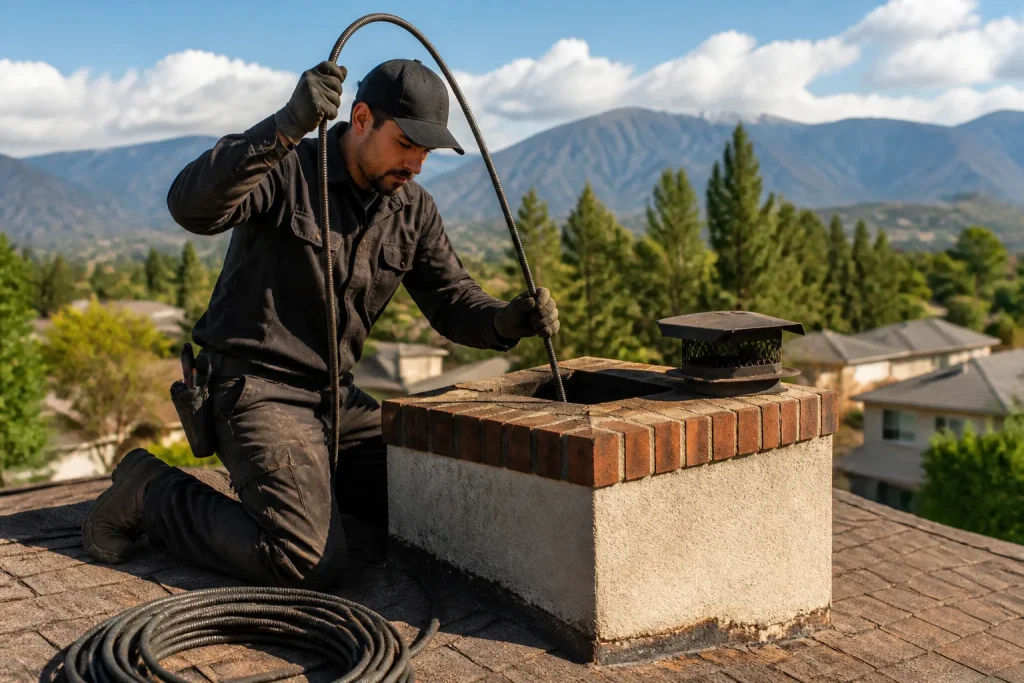
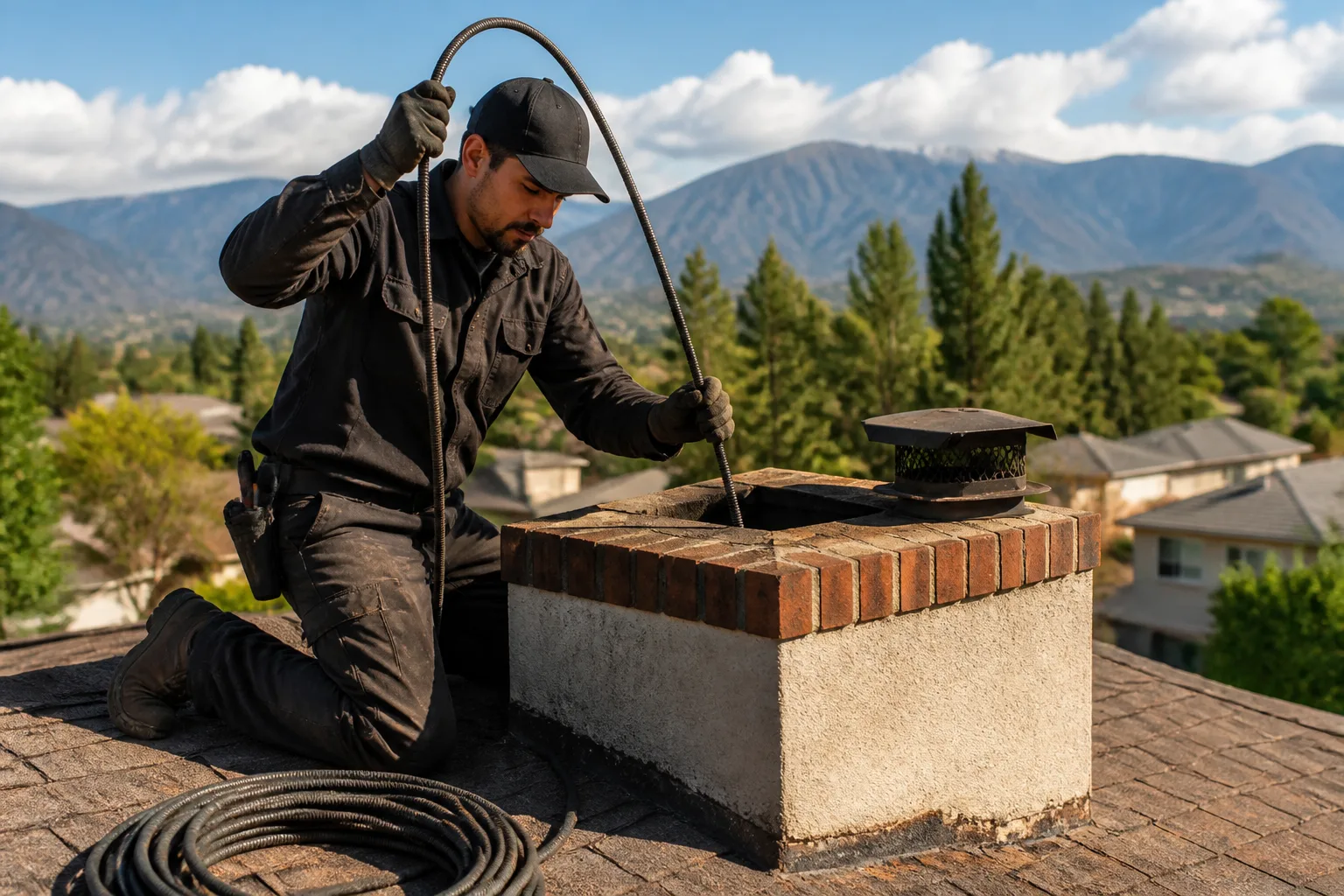
We start with a camera inspection of the entire flue system, top to bottom. The camera shows us what’s actually happening inside the chimney: cracked tiles, separated mortar joints, a damaged liner, creosote buildup, an animal nest, or a damper that’s stuck open. You see the same feed we see. Nothing gets recommended without visual evidence you can review yourself. If we’re going to tell you a liner needs work, you’ll see the crack on the screen before you hear the recommendation.
From there, the path depends on what the inspection shows. If the flue is intact and the issue is creosote volume from a chimney fire, a thorough chimney sweep may resolve it. If the fire or earthquake cracked the liner, we’ll talk through repair options. Our repair work uses HeatShield resurfacing for damaged flue liners and DuraFlex liner systems when a full reline is needed. These are contractor-grade materials, not hardware-store substitutes. The same products used by certified chimney contractors across the industry.
If the cap was damaged, we close the system out with matched hardware from Gelco or Famco so the termination is code-compatible and purpose-built, not something improvised from a big-box shelf. And because we also handle dryer vent cleaning, a single visit can cover both of your home’s major fire-hazard systems. Most chimney-only companies skip the dryer vent entirely, but a clogged dryer vent is a leading cause of residential fires, and it’s the kind of thing a homeowner should be able to handle with one call, not two.
What Documentation Your Homeowner’s Insurance Will Actually Ask For
Insurance claims after chimney fires or earthquake damage tend to move slowly, and the single biggest reason is missing documentation. You can keep your claim moving by knowing what the adjuster will ask for before the adjuster even calls.
After a post-emergency chimney visit, you should have all of the following in hand:
- A written inspection report describing the condition of the flue, the cause of the damage, and what was found. Not a verbal summary. A written report.
- Camera inspection photos or video showing the damage. Insurance adjusters rarely climb onto the roof or into the flue themselves. Your photos are their evidence.
- A repair estimate that separates emergency work from recommended work. Insurers want to see what was necessary versus what’s optional.
- A statement of what was done on the day of the visit, including any temporary measures put in place to make the system safe or inactive, even if no permanent repair was completed.
- Confirmation of materials proposed for repairs. If a liner reline is recommended, the claim will move faster if the estimate names the specific product, such as DuraFlex or HeatShield, rather than just saying “liner repair.”
Keep all of it in one folder. If the adjuster asks for anything else, you’ll have the foundation already. It’s not uncommon for a claim in Whittier to get delayed simply because a homeowner told the adjuster “the chimney company said it was bad” without a single piece of paper to back it up.
The Bottom Line
During an active chimney fire, the sequence is damper closed, firebox doors closed, everyone out, 911. After the fire department clears the scene, a Level 2 inspection is required before the fireplace can be used again. In Whittier, earthquake damage to chimneys creates a separate emergency category that many homeowners miss entirely, and a cracked flue liner after a shaker is a carbon monoxide risk you won’t smell. When you call a chimney company, describe the event clearly so they can tell you whether you need the fire department first. And after any emergency visit, get written documentation with camera evidence, because your insurance claim depends on it.
If you’re in Whittier and dealing with a chimney fire aftermath, earthquake damage, or a heavy smoke event that won’t clear, we can help. Chimney Sweep Whittier offers free estimates. Call (866) 361-2279. We answer 24/7. Fast dispatch from 7am to 7pm, Sunday through Friday.
Frequently Asked Questions
Call 911 first. A chimney sweep cannot respond to an active fire, and opening the damper to “let it out” will make the fire worse. Close the damper, close the firebox doors, evacuate, and call 911 from outside. Call a sweep company after the fire department has cleared the scene. Call (866) 361-2279 for a post-fire inspection and free estimate.
No. NFPA 211 requires a Level 2 inspection after any chimney fire before the fireplace can be used again. Chimney fires can crack clay liners and damage mortar joints in ways that are invisible from the outside of the chimney. Using the fireplace without an inspection risks another fire that could now spread through the damaged liner into the house structure. Call (866) 361-2279 to schedule the inspection.
Keep the fireplace cold and call for a camera inspection. Earthquakes can crack flue tiles and shift the chimney structure even when the exterior looks fine. A cracked liner after a quake means combustion gases can move into wall cavities instead of going up and out, and carbon monoxide is odorless. Call (866) 361-2279 for a free estimate.
You need a written inspection report, camera photos or video of the damage, a repair estimate that separates emergency work from recommended work, a statement of what was done on the visit, and confirmation of the materials proposed for any repair. Everything should be specific, including brand names like DuraFlex or HeatShield when those products are recommended. Call (866) 361-2279 and we’ll make sure you get documentation your adjuster can work with.
Written by the team at Chimney Sweep Whittier, serving Whittier since 2014.
Need Chimney Cleaning Help?
Call Chimney Sweep Whittier - licensed & insured, here with fast help in Whittier.
(866) 361-2279